SAVE THE DATE! CODECON #Žilina

26 November 2026

CODECON #Žilina brings together the tech community, IT professionals, and local companies in one place. Expect exciting tech topics, real-world insights, and plenty of opportunities to connect with people tackling challenges just like yours.

See you on November 26, 2026, at the New Synagogue! Come gain fresh insights, meet people from the IT community, and experience CODECON in a more intimate atmosphere.

CODECON Themes
AI and Data
Architecture and Design Patterns
Libraries, Frameworks, and Applications (Mobile & Web)
Quality Assurance and Automation
CODECON Themes
Cybersecurity and Security
Cloud and Cloud Services for Developers
Gaming – Tools, Design & App Development
Empowering Tech Professionals: The Role of Soft Skills

Meet the speakers of CODECON #Žilina 2026

Dušan Kocúrek

Panel Discussion: Vibe Coding and the Limits of AI-Generated Code

I've been building software for 30 years. A lot of people know me from the agile world, but for the past few years I've spent most of my time working with AI agents.

At ScrumDesk, I built an agentic pipeline that now powers how we ship our products: tools for project management, strategy planning, and business flow analysis and management. The pipeline covers the whole process, from preparing requirements through design and prioritization to code, tests, documentation, and production deployment. The agent itself gets a task done in anywhere from a few minutes to a few dozen. I keep developing this approach under the name ADLC (Agentic Development Life Cycle).

I'm also interested in what AI does to teams. When an agent writes code faster than anyone can spec it, who does what on the team changes, and so does the bottleneck. I also like to talk openly about which parts of the agentic hype don't work.

Miroslav Mikluš

Panel Discussion: What separates great developers from the average?

Years of experience, lines of code written, or simply delivering quickly don’t automatically make someone a great developer. Experienced senior engineers and managers will openly discuss what really sets top developers apart in practice: asking the right questions, understanding the business, communicating effectively, knowing when to say “no,” and choosing simple solutions over unnecessary complexity.

Janoušek Miroslav

Industrial AI Cloud – Infrastructure That Moves Europe Forward

I'm an IT professional with 20 years of experience and a self-confessed tech nerd since an early age.

I love exploring new technologies, pushing boundaries, and turning my managers' ambitious ideas into practical solutions for customers. These days, my main focus is building infrastructure for AI.

Peter Hraška

Three Prompts for Cinderella: And Who Checks Her Code?

I'm an engineer at Slido (Cisco) who loves all things visual, and these days I spend way too much time with AI agents. I'm endlessly fascinated by how engineering has changed more in the past few weeks than in the previous three decades. I can solve a Rubik's cube and cook the perfect tonkatsu.

Milan Martiniak

Panel Discussion: What separates great developers from the average?

I’ve been with KROS a.s. since 2007. I started out as a .NET developer building desktop applications, and today I’m the Chief Architect. My focus is on the architecture of our cloud products and on working with our development teams.

Peter Lučanský

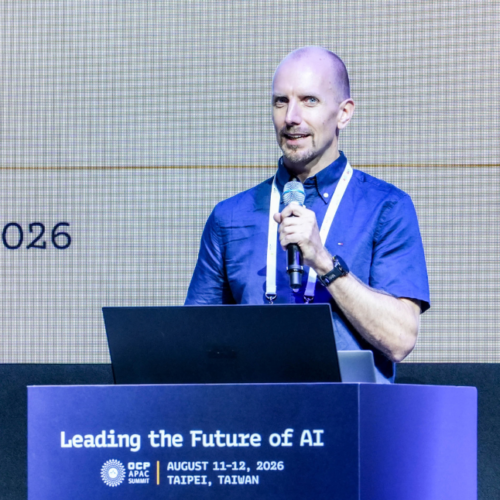
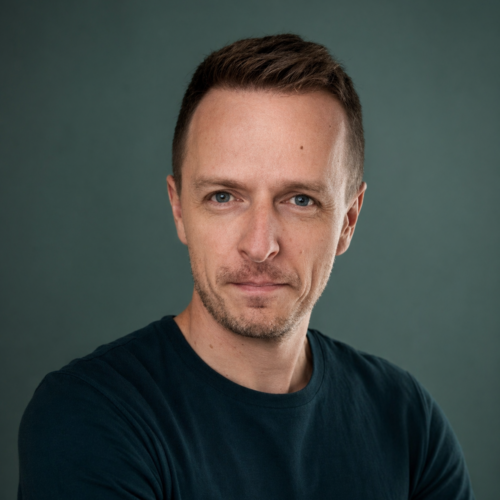
The architecture of modern AI accounting - How not to end up in jail because of AI

"I’m a .NET developer and architect with 20 years of experience. As Builder-in-Chief at Symetry, I’m helping build an AI-native accounting platform based on a bold, modern architecture.

We’re bringing AI into a domain where correctness, auditability, and trust are non-negotiable.

At CODECON, I’ll share the architectural and technical decisions we’ve made, the dead ends we’ve encountered, and the lessons we’ve learned along the way."

Ján Bödi

Clash of the Titans – Live Coding Session

Som IT profesionál s približne päťročnými skúsenosťami v oblasti IT infraštruktúry, systémovej administrácie a vývoja softvéru.

Ako zakladateľ spoločnosti BJ Nexus s.r.o. sa venujem vývoju moderných webových aplikácií a využívaniu umelej inteligencie pri tvorbe softvérových riešení.

AI používam ako svojho vývojového asistenta už od samotného návrhu architektúry aplikácie, cez výber vhodných technológií až po programovanie, testovanie a optimalizáciu kódu. Vnímam ju ako partnera pri vývoji, s ktorým analyzujem možnosti a hľadám efektívne riešenia.

Mojím hlavným projektom je Link IT Pros, platforma, ktorá prepája IT profesionálov s recruitermi a pomáha firmám efektívnejšie vyhľadávať vhodných kandidátov.

Verím, že budúcnosť vývoja softvéru spočíva v spojení ľudskej kreativity, technických znalostí a možností umelej inteligencie.

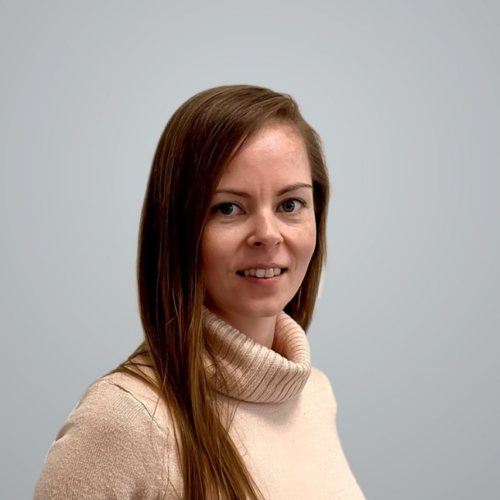
Oliver Kriška

Which pull request needs you right now?

I’ve been building things for the web for almost twenty years, and for the past ten, I’ve been using Elixir in production every day. I was CTO of an NBS-licensed payment provider, and today I work as a senior engineer on a large-scale Phoenix application running in production for a US client. For the past two years, we’ve been using AI extensively—not as an experiment, but as part of our everyday workflow and as a component of our product. This has given me real-world data to share, rather than relying on studies found online.

Alongside my day job, I build open-source tools to support my own workflow and share them with the community: [phxagents.dev](http://phxagents.dev/) (a harness for AI agents in Elixir), [prmarmot.dev](http://prmarmot.dev/) (pull request triage), [getscribe.dev](http://getscribe.dev/) (a knowledge base maintained by an LLM), and cmux-sentinel (an overview of running agents in cmux). AppSignal has published a case study about my CLI agent skill.

I’ve spoken at CodeCon three times: in Bratislava, where I talked about Phoenix LiveView; in Žilina in 2024, where I covered search in PostgreSQL; and in 2025, when I spoke about context engineering. The last two talks are available on YouTube. This year, I don’t want to add to the AI hype. Instead, I want to share concrete techniques and production metrics that developers can apply in their own work.

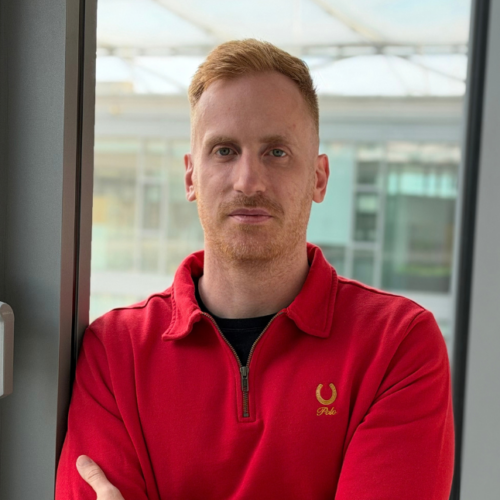
Jakub Mikuláštík

How to balance code and people: The journey from developer to technical team lead

I have 10 years of experience in software development, progressing from a junior developer through mid-level and senior roles to becoming a solution architect in the payments domain at Slovenská sporiteľňa.

For the past year and a half, I’ve also been leading a team of nine people: four developers, four business analysts, and one solution architect.

I spend around 60% of my time on leadership, while the rest is dedicated to my work as a solution architect. I design technical solutions, advise developers and analysts, take part in production on-call rotations, and keep an eye on industry trends and competitors in the payments space. This helps me identify opportunities and shape the team’s future direction.

Roman Zelenaj

Observability Under Regulatory Scrutiny: OTel, Prometheus, and SIEM in a Single Pipeline

I've spent over ten years in infrastructure, from data centers and networking through virtualization to Kubernetes and GitOps. For the past three years at Grow2FIT, I've been building observability for environments where downtime is more than an inconvenience: a crypto payment platform running a network of ATMs, gateways, and POS terminals.

I want to talk about observability from an angle you don't often hear at conferences: when your monitoring is dictated not just by SRE practice, but by a regulator. DORA and MiCA don't ask for a dashboard. They ask for a provable ability to see what's happening in your system, and to back it up after the fact. That changes the architecture: telemetry and security logs run through a single pipeline, logs have to be immutable, and the whole stack has to be versioned and reproducible.

This isn't theory, and it isn't a product demo. It's a setup we've actually built and run in production, including the things we'd do differently today. You'll leave with a concrete list of decisions you can map onto your own environment.

Martin Lacina

Industrial AI Cloud – Infrastructure That Moves Europe Forward

I’m a UNIX engineer with over 20 years of IT experience in scripting, programming, and training. I currently build and deploy AI environments. In my talk, I’ll explore AI Industrial Cloud infrastructure and its role in driving Europe forward.

Jan Koběrský

How to Build an SDK Developers Love

I have specialized in mobile development (iOS, Android, and cross-platform) for 14 years and in mobile security for 12 years. As a Principal Software Developer, I lead a team developing around 50 mobile SDKs for banks and startups worldwide. My goal is always to achieve the highest levels of security, usability, and stability.

Jaroslav Brtiš

Panel Discussion: Vibe Coding and the Limits of AI-Generated Code

I’ve been working as a programmer for over 16 years, currently as a full-stack developer specializing in Java, Spring, and Vue.js. I’ve worked on a variety of projects across transportation, government, banking, and telecommunications. Since 2019, I’ve been working 100% remotely as a freelancer and have traveled around half the world as a digital nomad.

Raul Rodriguez

Panel Discussion: Vibe Coding and the Limits of AI-Generated Code

I’m the CEO of the fashion brand Dajana Rodriguez and the founder of Promedea, where we teach people and businesses how to work with AI.

Over the past few months, I’ve gone all-in on AI and vibe coding in my own company—not as something to talk about in presentations, but as a tool that delivers real business results. I’ve built several internal applications, developed our own AI system that connects the entire company, and automated key business processes.

More than 800 people have attended Promedea workshops. I keep things direct and practical, with no unnecessary theory. I show real-world implementations that can have an immediate impact on the business.

My motto: “No fluff. No BS. Just practical, real-world application.”

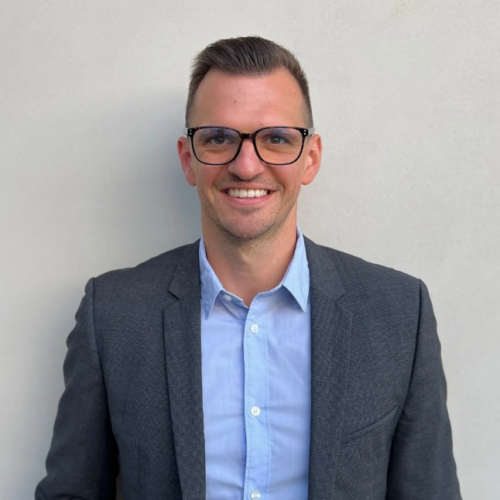
Jiří Činčura

0xDEADBEEF: Why your computer’s memory is full of jokes (and how they can help you debug)

I’m a .NET, C#, and Firebird expert with a focus on data and business layers, language features, parallelism, databases, and application performance. I’ve been involved in open source for nearly 20 years, including the FirebirdClient project. I’m a Senior Software Engineer at Microsoft, as well as a speaker and blogger at tabsoverspaces.com.

Filip Hric

Why agents ignore your rules

I’m a Developer Relations Engineer at Qodo, helping teams build high-quality software and navigate the AI era. My blog has been read over 2 million times, and thousands of developers and testers have taken my courses. I speak at conferences around the world and I am a Codex Ambassador and AAIF Ambassador. I live in Slovakia with my wife and our four children.

Pavel ‘Michal’ Pavlásek

Using Local LLMs to Support Development and Customer Projects

I'm a seasoned software developer and IT consultant with extensive experience designing and delivering information systems. More recently, I've been focusing on the practical use of AI and local language models: integrating them into development workflows and deploying them in client solutions.

Ivan Kopčík

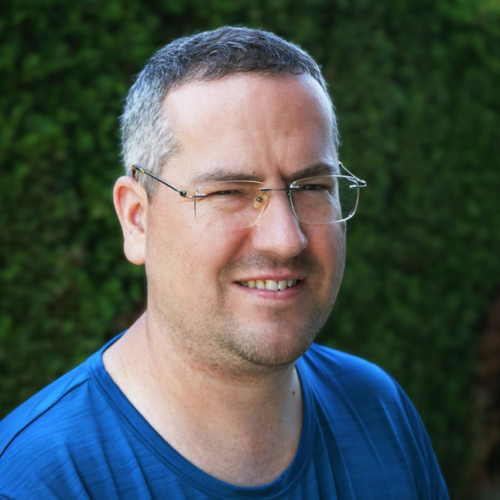
Clash of the Titans – Live Coding Session

Digital innovator with deep e-commerce expertise, focused on AI, helping businesses adopt it, and consulting | Proud dad, loving husband, entrepreneur with integrity and dedicated local councillor who loves sport and a healthy lifestyle.

Martin Mravec

Code review as a source of rules, not just comments

I lead Data and AI at Ringier Slovakia, where my team and I build production AI systems for newsrooms as well as internal tools. I also write code daily on my own projects. Repeated patterns in code reviews led me to explore how to turn insights from reviews into rules that work for both people and AI agents.

Martin Šustek

People development, leadership training, team building

I've reported to inspiring seniors with an amazing work ethic and zero EQ, to micromanagers, to HR people with all the right degrees, and to truly mature managers. I've mentored people at a small startup, run around two hundred interviews, and worked as a salesperson, a UX designer, customer support, and a product owner. At one point in my "career," I led about 40 people through six leaders who were still learning the ropes.

Angela Micheli

From Features to Value: Why Customers Stay, Leave, or Grow - and What to Do About It

I sit at the intersection of customer data, feedback, adoption metrics and churn analyses. I see where the gap forms between what the team builds and what customers perceive as value. I’m passionate about customer success because I believe in a fair exchange of investment-to-value. At CODECON, I want to bring a perspective developers don’t often see: what customers truly need, what frustrates them, and why some leave even when the product works technically very well.

Kristína Kumor

404: Message Not found. Why your audience Isn’t getting your message (and how to fix It)

I’m a host, facilitator, and public speaking trainer. I help people communicate with greater confidence, clarity, and impact — without the unnecessary fluff.

I’ve already hosted a workshop called *Debug Your Delivery* at CODECON Bratislava, and I’d love to build on that experience with another hands-on talk in Žilina.

I’m passionate about bridging the worlds of technology and communication, and showing people that even the best idea needs great delivery to truly resonate with its audience.

Zuzana Badlíková

AI Odyssey (Testing Odyssey Vol. 2): From questions to bugs We weren’t looking for

I stumbled into software testing by chance and never looked back. Over the years, I’ve specialised in test automation architecture. These days, I’m increasingly focused on AI skills that can build and maintain test frameworks across different projects.

I’m naturally curious about new technologies, but what matters to me even more is whether they fit into a well-thought-out process that actually works.

Fero Volár

1:1s as a development tool, not a status meeting

I love the intersection of technology, business, and marketing. I have over 20 years of experience in IT and cloud computing, helping mid-sized and large enterprises design and operate solutions across infrastructure, containerisation, scalability, and security.

I’ve spent over 10 years in B2B, working in product management and marketing, as well as building and leading international technology and sales teams. I regularly speak at conferences, deliver training on cloud-native technologies and Kubernetes, and advise companies on productisation, leadership, and business strategy.

Ján Podmajerský

Panel Discussion: What separates great developers from the average?

I’ve been working in software for over 13 years. Before that, I studied IT and philosophy.

I’ve been pretty lucky throughout my career. I joined a growing startup where I learned pretty much everything I know. Nine years later, I’m still here and still enjoying it, even though we’ve since become part of a large corporation.

For the past few years, I’ve been leading a team with a high degree of autonomy, which gives us plenty of room to experiment with how we build software. Over time, we’ve iterated on the way we work and arrived at what I believe is our best setup so far. That’s what I’d like to share with you.

I believe software development is a team sport, not an individual activity. We get the best results when everyone feels like they’re part of the team, has a sense of ownership, and can take responsibility for the things they work on. When people feel like they’re working on something that’s truly “theirs” and have a real say in the decisions, the whole team benefits.

Outside of work, I founded an IT community in Poprad and now run one in Trenčín (a.k.a. the Slovak digital nomad 😉). I also have four young kids and volunteer with people experiencing homelessness.

Across all these areas, I keep coming back to the same lesson: if we want to make things better, we need to build on trust, not control.

Tomáš Repčík

Making apps and health data understand each other

I'm a software developer with a background in biomedical engineering and bioinformatics. I work on medical mobile apps and explore practical ways to use AI in software — from helping with the development process to integrating generative AI directly into applications.

Andrej Hlúbik

AI and Cybersecurity

My name is Andrej Hlúbik, and I am one of the creators of the BuildITBreakIT workshop. The other creator is my wife 🙂.

I am an ethical hacker (penetration tester) at Siemens Healthineers, where I specialize in testing internal systems and medical devices. I also enjoy giving talks at various events for students and teachers, because the younger generation is our future.

In my free time, I enjoy experimenting with local AI models.

Ondrej Proksa

Company Know-How as MCP: The Context Engine Powering Code, Analysis, and Business Decisions at Muziker

I’m the CTO and co-owner of Muziker. I started out as a software engineer (FIIT STU), and together with my team, we built a large part of our e-commerce and ERP architecture in Ruby on Rails.

Today: 50 countries, 45 domains, 50+ million requests a day, and a ClickHouse DWH. I’m leading the AI transformation: custom-built agents, custom MCP servers, production RAG, agents for SEO and GEO, and other automation solutions.

I’m on the board of Ecommerce Slovakia, and Muziker supports RubyAkadémia.

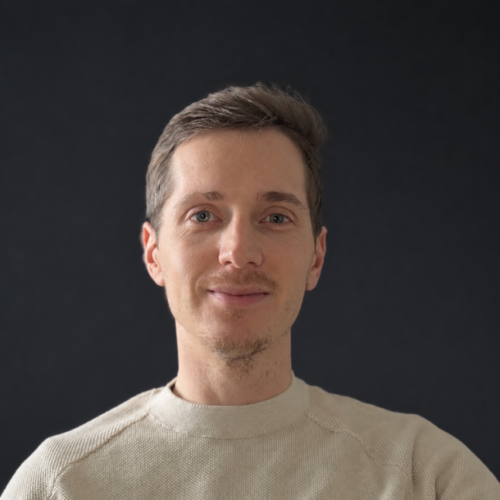
Juraj Onuška

Tokens under control – Optimizing token usage with headroom

I currently work as an AI & Automation Engineer at Multitude, with many years of experience in software engineering.

I’m also starting to give talks on various IT topics. I enjoy talking about subjects I find interesting, sharing my knowledge and insights with others, and learning along the way.

When I’m not behind a computer, I enjoy climbing, both indoors and outdoors, making music, and, above all, spending time with my family.

Marek Panti

Under the Hood of JavaScript: Prepare for Your Interview with Understanding, Not Memorization

I've been working as a software developer for over 10 years. Every year, I enjoy it more, and every year, I realize how much I still have to learn. I mainly write about Angular on Medium, but lately, I've been getting interested in pretty much everything, including backend development.

Marián Vlčák

How to become an amateur Blogger, part-time podcaster, and speaker picked by AI

I'm an introvert who moved to the Orava region. After a while, I started finding it a little lonely working as a programmer on my own, so for the past 15 years I've been finding different ways to support the Slovak developer community.

I started out writing for vyvojari.sk, later I learned about Daniel Harcek's WebUP, and eventually I launched the vyvojari.dev community project. To help it, I started writing a weekly newsletter at https://blog.vyvojari.dev/tag/tyzdennik/. Through WebUP, I also got involved with CODECON and ended up on the program committee. A year ago, I became a co-host of Dávid Tvrdoň's Link podcast.

None of this was planned. All it ever took was reaching out and taking the first step. And that's exactly what I want to talk about: at a time when AI is taking over an ever-growing part of our work, we're losing what used to make us happy — programming — and somehow we have to deal with that. Being visible in the community may be the cheapest insurance we can buy.

I don't have a theory or a methodology, but I have fifteen years of trial and error, and a few things that worked. I want to share those with you.

Michal Šubert

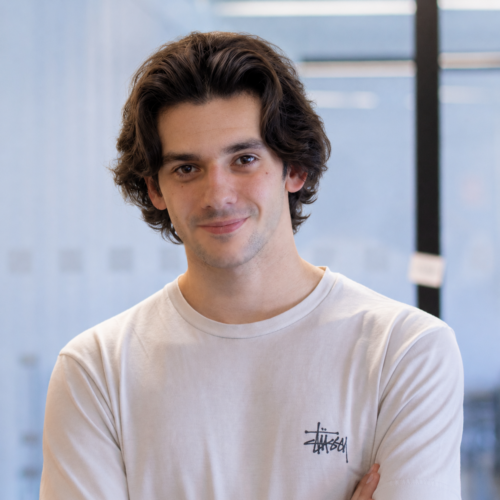
How to navigate your first steps in IT?

My journey into IT hasn’t been straightforward. Programming didn’t come naturally to me for a long time, and throughout both high school and university, I often wondered whether I had chosen the right path. Then things started to change…

I’ve been working at GLOBESY for over two years, where I’m now building an AI Ops architecture that takes routine operational tasks off the development team’s plate. This is also the focus of my master’s thesis in Intelligent Information Systems at the University of Žilina.

I’ve built and deployed apps using Flutter and Spring Boot in production, but these days, my focus is more on DevOps.

Before getting into IT, I spent over five years leading people in youth organizations and organized more than 20 sports and gaming tournaments. Those experiences taught me how to communicate clearly and connect with people on a human level.

Alongside my work, I’m also studying theology in Vienna, with a focus on leadership.

And, of course, I’m always happy to enjoy a cup of good specialty coffee in great company. ;)

Program CODECON #Žilina 2026

08:00 - 08:45
TITANS STAGE
REGISTRATION

Check in and soak up the vibe. You can arrive at CODECON anytime during the conference day. Just have your online ticket ready.

Read more
08:45 - 09:00
TITANS STAGE Café STAGE Siemens Healthineers STAGE
Let’s go live: Opening the stages

The program runs across three stages: TITANS STAGE (main stage on the ground floor of Nová synagóga), Café STAGE (the café inside Nová synagóga), and Siemens Healthineers STAGE Bábkové divadlo (Puppet Theater).

Read more
09:00 - 09:25
TITANS STAGE
Making apps and health data understand each other

What if GenAI could go beyond chat and dynamically adapt an app to the user’s data and goals? This talk explores practical approaches to GenAI in medical apps.

From presenting data, insights, and results to dynamic UI, and where to draw the line between AI-generated and deterministic behavior.

Read more
09:00 - 9:55
Café STAGE
Panel Discussion: What separates great developers from the average?

Years of experience, lines of code written, or simply delivering quickly don’t automatically make someone a great developer. Experienced senior engineers and managers will openly discuss what really sets top developers apart in practice: asking the right questions, understanding the business, communicating effectively, knowing when to say “no,” and choosing simple solutions over unnecessary complexity.

Read more
09:00 - 9:55
Siemens Healthineers STAGE
The architecture of modern AI accounting - How not to end up in jail because of AI

Accountants have done event sourcing for 500 years, unknowingly.

How to be fast and auditable?
Why a modular monolith, not microservices?
How to keep other tenants' data from AI? (Not via prompt…)
Why isn't MCP a REST API?
How to orchestrate AI agents without losing control?
How to give the user the final say?

In practice: CQRS, DDD, event-driven.

Read more
09:30 - 9:55
TITANS STAGE
Industrial AI Cloud – Infrastructure that moves Europe forward

Behind every AI solution that works in practice is powerful infrastructure. Industrial AI Cloud, a joint project by Deutsche Telekom and NVIDIA with nearly 10,000 NVIDIA GPUs, is already up and running in Munich. This innovative platform enables companies to train and run AI models and simulate production. It also gives Slovak DevOps engineers and technical specialists the chance to work with cutting-edge technology and help shape the future, right from Košice. You’ll learn about the AI infrastructure already in place at the Munich data centre, along with plans for expanding its capacity and why that matters for Europe. Miroslav Janoušek, an architect at Deutsche Telekom IT Solutions Slovakia, will take you behind the scenes.

Read more


10:00 - 10:55
TITANS STAGE
Siemens Mobility Tech Quiz

Think you know your way around tech? Then game on! Siemens Mobility is bringing an interactive quiz show to CODECON, where you’ll go head-to-head with other attendees, put your tech and general knowledge to the test, and maybe even learn something new. Expect fun questions, a competitive vibe, and great prizes for the top players. Ready to play?

Read more
10:00 - 10:55
Café STAGE
People development, leadership training, team building

I want to help the audience: organize their time, grow personally, change their perception of leadership, become more resilient and leave with specific approaches they can immediately test in their own practice.

Key takeaways: Self-improvement, Authenticity, Trust and integrity, Frustration management, Ownership, Holistic approach, Task delegation

Read more
10:00 - 10:55
Siemens Healthineers STAGE
Panel Discussion: Vibe Coding and the Limits of AI-Generated Code

AI can generate a working app in just a few hours. The question is what happens six months later, when something needs to be changed in the code and no one really knows how it works.

In this discussion, we want to explore where productive “vibe coding” ends and invisible technical debt begins—and how to put the right practices in place, from code reviews and testing to documentation, for code that was largely written by AI.

Read more
11:00 - 11:25
TITANS STAGE
How to navigate your first steps in IT?

Starting out in IT is harder today than ever before. AI is reshaping development every month, there are so many technologies you don't know where to begin, expectations are high, and comparing yourself to others has never been easier. If any of this sounds familiar, this talk is for you. I'll share what I struggled with and the problems juniors run into most often. Using real examples, I'll show you the habits, mindsets and communication skills that helped me survive my first years and keep growing.

You'll walk away with realistic expectations (without idealism or cynicism), practical tips and, I hope, the encouragement that you're not in this alone.
Read more
11:00 - 11:25
Café STAGE
404: Message Not found. Why your audience Isn’t getting your message (and how to fix It)

Even the best idea is worthless if it gets lost on its way to the audience. Yet when presenting, we often make the same mistakes: too much data, overly complicated language, unclear structure, a weak opening, or a key message that gets lost somewhere between the slides.

We’ll explore how to debug your presentation so that people understand your message, remember it, and ideally, believe in it too.

You’ll walk away with practical tips you can apply to your next demo, meeting, pitch, or even on the big stage.

Read more
11:00 - 11:25
Siemens Healthineers STAGE
AI and Cybersecurity

Does manual penetration testing still make sense in the age of AI? How does AI help with cybersecurity? Where does it work well, and where does it fall short? How can attackers use AI? Let’s explore these questions together.

How AI is changing and has already changed cybersecurity
AI: a good servant, but a bad master
AI tools in penetration testing
How I use AI in my work
Is it

Read more
11:30 - 11:55
TITANS STAGE
Three Prompts for Cinderella: And Who Checks Her Code?

Most people try to be reasonable with AI. I don't. If you can imagine it, it should at least try to exist. A PowerPoint deck? How about one the audience controls, live, in everything? Will it work? We'll see.

Meanwhile, we generate more code than anyone could write in a lifetime. So who checks it? Should anyone? And other wild topics.

Read more
11:30 - 11:55
Café STAGE
Observability Under Regulatory Scrutiny: OTel, Prometheus, and SIEM in a Single Pipeline

A crypto payment platform: an ATM network, a payment gateway, and POS terminals. Multiple Kubernetes clusters, plus VMs, Proxmox, and network infrastructure. Every layer had its own monitoring, and none of them could answer the question: what's happening with this payment right now? On top of that, DORA and MiCA, which don't want a dashboard. They want a provable ability to reconstruct an incident after the fact.

Here's how we turned all that into one central stack: Loki, Prometheus, and Grafana, with the OpenTelemetry Collector as the transport layer. VMs and network devices feed into the same pipeline via exporters and SNMP. Wazuh SIEM and immutable logs sit right next to the telemetry instead of in a parallel system. The whole stack is versioned through GitOps.

To wrap up, lessons learned: what we'd build differently today.

Read more
11:30 - 11:55
Siemens Healthineers STAGE
Why agents ignore your rules

Loading rules doesn’t mean enforcing them. Learn to write rules that matter and check whether the generated code follows them. We’ll cover conflicts in AGENTS.md, context limits, and how hooks, agent loops, and software factories help verify the result.

Read more

11:55 - 13:00
Siemens Healthineers STAGE TITANS STAGE Café STAGE
LUNCH BREAK

Time to grab a proper hot meal. We recommend planning your lunch ahead, whether that’s booking a table at a restaurant or ordering through Wolt, Bolt Food, Bistro.sk, or another delivery service. Since CODECON is free to attend, food isn’t provided for attendees.

Read more
13:00 - 13:55
TITANS STAGE
Clash of the Titans – Live Coding Session

AI Battle is a live coding competition where contestants go head-to-head solving programming challenges with modern AI coding agents. The goal isn’t to write code by hand. It’s to work effectively with AI tools and show how they can speed up solving real-world problems.

Read more
13:00 - 13:55
Café STAGE
From Features to Value: Why Customers Stay, Leave, or Grow - and What to Do About It

Main topics of the talk:
1. Why customers leave even technically solid products
2. The difference between using a product and actually gaining value from it
3. The most common gaps between the developer’s and the customer’s perspective
4. What customer data and feedback can tell us
5. Practical ways to reduce churn and support product adoption

The goal of the talk is to show developers how to better understand their customers and how this understanding can help them build products that users not only start using, but also stay with.

Read more
13:00 - 13:55
Siemens Healthineers STAGE
Code review as a source of rules, not just comments

The same code review comments, over and over? I’ll show how AI agents analyze reviews and propose rules for future development. We’ll follow the process from a pull request comment to a proposed rule and the decision to accept or discard it. Concrete examples will show what worked for us and where we hit limits.

Read more
14:00 - 14:25
TITANS STAGE
Tokens under control – Optimizing token usage with headroom

The talk will show how to reduce token usage when working with coding agents and applications powered by LLMs—from system prompts and context management to different settings and parameters, code mode, and specific tools such as Headroom. Participants will learn where the savings come from, how they work, and how to apply them in their own workflows. Fewer tokens mean lower costs, faster responses, and more efficient development.

Outline:
System — The environment, model, and harness; how they work together and affect token usage.
Settings — Model selection, prefix caching, code-mode, and the system prompt.
Compression — Core principles, modern tools, and context optimization.
Headroom — How it works, setup, benefits, and scaling.
Read more
14:00 - 14:55
Café STAGE
AI Odyssey (Testing Odyssey Vol. 2): From questions to bugs We weren’t looking for

For years, I tested and implemented tests using black box techniques. Static analysis and white box testing were too time-consuming. With AI, not anymore. I “asked” a 30-year-old repository how its undocumented features work and why a bug occurred with an unreadable error message. I’ll show what worked, what didn’t, and what it means for shift left.

Read more
14:00 - 14:55
Siemens Healthineers STAGE
Which pull request needs you right now?

In a production Phoenix application, we opened nearly 3,800 pull requests in a year, peaking at 470 in a single month. How do you keep track of them all without relying on people to catch issues that tools can already detect?

Read more
14:30 - 14:55
TITANS STAGE
How to balance code and people: The journey from developer to technical team lead

Does a team lead have to stop being an engineer? No, but moving from developer to team lead means finding a new balance between people, technology, and responsibility. Drawing on my own path from junior to senior, architect, and now lead of a nine-person team, I’ll share my 60:40 model for leading people while staying technically relevant. I’ll cover 1:1s, feedback, and delegation, and how to remain the team’s technical backbone without micromanaging or taking over their work. I’ll also show how I split my time between leadership and technical work, and how I use lessons from production and architecture to set the team’s technical direction.

Read more
15:00 - 15:25
TITANS STAGE
How to Build an SDK Developers Love

The best SDKs are the ones developers don't even notice. Discover how development differs from apps and how to spot the good ones. What makes devs love or curse them?

Read more
15:00 - 15:55
Café STAGE
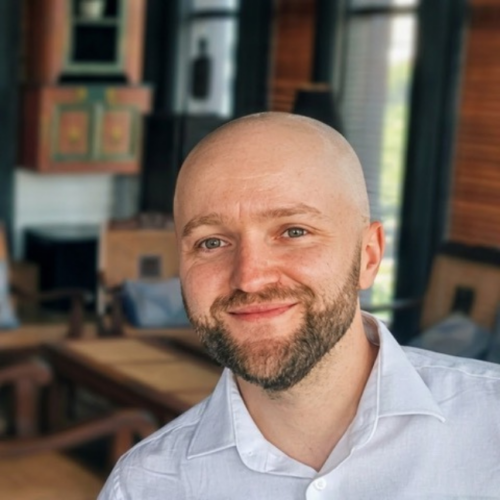
0xDEADBEEF: Why your computer’s memory is full of jokes (and how they can help you debug)

This lecture is a guide to the world of hexspeak - from magic numbers to poison values ​​to crash codes. You'll leave with why uninitialized memory is embarrassing as soon as you boot it, what "bad coffee, odd food" means in a crashing kernel, and how to sneak your own word into 32 bits. No prerequisites - just know that 9 is followed by A.

Read more
15:00 - 15:55
Siemens Healthineers STAGE
Company Know-How as MCP: The Context Engine Powering Code, Analysis, and Business Decisions at Muziker

You have agents. You have MCP. And you still get generic answers — because the context is missing. In most companies everyone builds their own: md files in a repo, RAG, vectors, Obsidian. But what if everyone had all of it? A context engine isn’t one box that solves this on its own. I’ll show what we actually tried: off-the-shelf open-source solutions vs. our own, Qdrant as a vector database, and sharing context between agents in Multica. And that development, support and business each need something different — including what didn’t work for us.

Read more

15:30 - 15:55
TITANS STAGE
1:1s as a development tool, not a status meeting

“How are you?” - “Fine.” The project? Fine. Anything from me? Probably nothing. Great, we’re efficient...

A 1:1 shouldn’t be a status meeting. It’s time we dedicate to one person - their growth, their challenges, and where they want to go. For me, it’s one of the most valuable investments a leader can make, and at the same time, it’s a space where trust is built, where we catch problems before they turn into crises, and where we help people navigate change.

I’ll show you how to turn 1:1s into a development system, what kinds of questions bring real issues to light, and why sometimes it’s best just to listen.

You’ll walk away with principles and questions you can use in your very next 1:1.

Read more
16:00 - 16:25
TITANS STAGE
Coming soon

Talk details coming soon.

Read more
16:00 - 16:55
Café STAGE
Under the Hood of JavaScript: Prepare for Your Interview with Understanding, Not Memorization

Wonder what happens in the browser when your JavaScript runs? We’ll go beyond the Event Loop to explore Task & Microtask queues, memory Heap, Garbage Collection, and background framework magic. Finally, we'll dive into Closures, functional programming, and Event Bubbling.

Read more

16:00 - 16:55
Siemens Healthineers STAGE
Using Local LLMs to Support Development and Customer Projects

A practical look at running local LLMs for software development and customer projects. We'll explore real-world performance, hardware requirements, production readiness, and limitations, including a comparison of Qwen, Gemma, and Mistral models with a focus on Slovak language capabilities.

Read more
16:30 - 16:55
TITANS STAGE
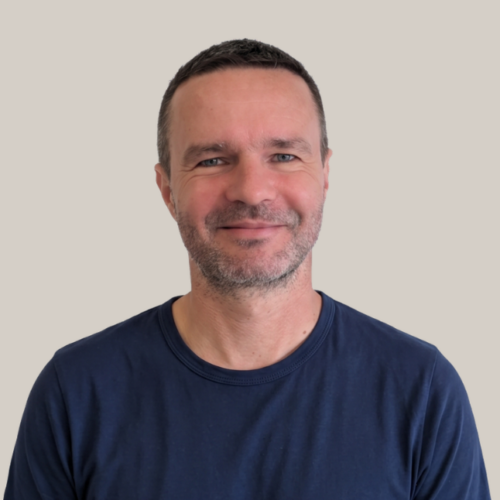
How to become an amateur Blogger, part-time podcaster, and speaker picked by AI

Just a few years ago, I thought I’d be a programmer for the rest of my life.

Today, AI writes a growing share of the code, and the job market seems to be heading in a direction where companies may rather buy an AI agent than hire a programmer. Maybe soon it won’t matter as much what you know, but whether anyone even knows you exist.

This isn’t going to be a talk about becoming an influencer or a guide to cracking the LinkedIn algorithm. It’s a story about the journey of an introvert who moved to the Orava region and somehow found a way to stay involved with the community for the past fifteen years.

What you’ll take away:

- why personal branding matters in the age of AI,
- what actually works when you’re an introvert, don’t live in Bratislava, and aren’t good at marketing,
- why stepping outside your comfort zone matters and why sometimes all you need to do is reach out.
Read more

CODECON RETURNS TO THE NEW SYNAGOGUE

This year, we’re meeting again at the New Synagogue – a venue whose remarkable architecture and cultural heritage give the conference a truly unique atmosphere.

On November 26, 2026, technology, IT professionals, and the local community will come together here once again. And it’s this special setting that gives CODECON #Žilina its own distinctive character.


Partnership

We regret seeing talented Slovaks leave the country. ​​Let’s support the developer and IT community in the region together. Let’s create synergies, new opportunities, and exciting projects—and push technology forward as a community. Join the CODECON community today!


What People Are Saying About Us

Thank you for an excellent conference. The event was top-notch, and I enjoyed it both as a speaker and a participant. I especially want to highlight the stage managers’ willingness and proactivity during the rehearsal and in making last-minute adjustments to the presentation.

It was a great experience for me. I’m especially excited about people’s reactions. I spoke with various people, and they were all very happy that something like this had been organized. They praised the format, content, organization, and overall atmosphere.

The CODECON program was truly packed. The diversity of lectures and workshops covered a wide range of IT trends. It was clear that the organizers put great care into selecting the speakers, as the lineup was truly top-notch. I truly appreciate having another event that helps our community grow and move forward.

First of all, thank you! One of the best parts of the conference was reconnecting with former colleagues and having the chance to catch up. I don’t mean that as criticism of the program at all — quite the opposite. It’s one of the greatest strengths of the event.

Thank you for an excellently organized event. This was my fourth time participating, and it seems to get better every year. I’m already looking forward to the next one!

It was amazing, intense, and perfectly organized. Bravo!

CODECON in Slovakia is exactly what the Slovak developer community has long needed. Having a space where developers can meet, share experiences, and connect is truly invaluable. I’m delighted that we have an event that supports inspiring ideas, innovative projects, and talented people.

Program Committee

Our mission is to deliver top-notch, engaging content on topics that truly resonate with our community.

To ensure an exceptional experience, we have assembled a strong Program Committee responsible for selecting the best content and ensuring that only the most inspiring and cutting-edge topics make it to the conference.

Milan Martiniak

Program Committee

Miňo has been working as a developer/architect at KROS since 2007. He began as a desktop developer and, in recent years, has been focusing primarily on web and cloud development. Be sure to check out Miňo's blog at blog.burgyn.online for insights on .NET technologies. Miňo is also a co-organizer of the KROS Dev Meetup and an occasional speaker on development at various developer conferences.

Marián Vlčák

Program Committee

Vlko is the CTO at FinStat. In his spare time, he curates interesting links, which he shares in a weekly blog at blog.vyvojari.dev. He is also active in several developer community initiatives, including organizing the WebUp technology meetup in Žilina and contributing to the development of the vyvojari.dev portal.

Robert Zuberec

Program Committee

Robo is the Director of Descartes Slovakia, with over 20 years of experience in .NET application development. He implements standard development procedures, CI/CD pipelines, and security measures for international teams. He oversees the operations of the development center in Žilina, which also involves working with students, supervising diploma theses, and supporting project-based teaching.

Igor Pavelek

Program Committee

Igor is the co-founder of Pygmalios, a company specializing in developing innovative AI solutions for brick-and-mortar stores. He previously served as COO at Pygmalios and is currently focused on business development and marketing. Together with his wife, designer Lenka Sršňová, he channels their shared passion for design into a brand dedicated to sustainable design merchandise.

Daniel Harcek

Program Committee

Daniel is the Head of Technology at WageNow, where his mission is to innovate payroll and related financial processes. A passionate technology enthusiast, he is particularly interested in emerging trends such as cloud computing—especially serverless technologies—and, of course, AI. In his free time, he co-organizes technology community meetups called WebUP in Žilina, as well as the StartupWeekend Žilina hackathon. He also firmly believes in the tremendous potential of network effects.

Jakub Stehlík

Program Committee

He first encountered the cloud nine years ago, at the end of his university studies. Since then, he has worked on various projects as a DevOps, Cloud, and Platform Engineer. He is currently exploring the fascinating world of Kubernetes and Cloud Native technologies at Labyrinth Labs, and he enjoys sharing his experiences at conferences and meetups.

Zuzana Badlíková

Program Committee

Although Zuzana got into testing by chance, she was quickly captivated by the dynamic evolution of testing in IT. Over the course of 15 years, she has progressed from tester to test lead and then to QA developer. During this time, she has worked on a variety of automated testing solutions, including designing test scenarios, architecting automated tests, deploying them, and ensuring their sustainable development. In recent years, her focus has been on API testing.

Marek Panti

Program Committee

He is a programmer passionate about exploring various aspects of front-end development and JavaScript. He has worked on several projects, ranging from senior developer to consultant. Lately, he has been focusing on creating Angular components, which he shares on his GitHub, some of them as open-source packages on NPM. In his free time, he writes a tech blog on Medium.

Peter Širka

Program Committee

It has been 12 years since Peťo laid the foundation stone for the CODECON conference. For 8 of those years, he and his team at Total Avengers organized the conference and kept the community thriving. Today, he remains a stable and inspiring member of the entire team as well as a member of the program committee.

Fero Volár

Program Committee

Fero serves as Chief Growth Officer (CGO) at Labyrinth Labs, where he leads the marketing and sales teams.

He has 20+ years of experience in IT and cloud, helping mid-sized and large companies design and operate solutions across infrastructure, containerization, scalability, and security.

He has 10+ years of experience in B2B, spanning product management, marketing, and building and leading international tech and sales teams.

Fero is a regular conference speaker, cloud-native and Kubernetes trainer, and consultant specializing in productization, service design, and business strategy.

Martin Šustek

Program Committee

Martin is a long-time IT public speaker, having spoken at events such as CODECON, WebUp Žilina, and FooConf Helsinki.

He focuses on connecting different areas of life and communicating in accessible language how IT professionals can benefit from adopting these approaches.

He studied Software Engineering at the Faculty of Informatics and Information Technologies at Slovak University of Technology (FIIT STU). His areas of interest include various aspects of IT (frontend, CI/CD, tooling, ...), people management, developing leadership skills, and the impact of movement on quality of life, particularly for people with sedentary jobs.

GET INTO THE CODECON SPIRIT

While we're preparing the next edition of CODECON #Žilina, why not revisit the previous ones? On our YouTube channel, you'll find talks packed with practical insights, tech topics, and tips from people who work in IT every day.

Check them out and get inspired!

MAIN PARTNERS
MEDIA PARTNERS
COMMUNITY PARTNERS
Don’t miss the latest CODECON updates
Link copied to clipboard